Source lake jig head fishing lure for Sea Lake Ocean Beach
Compare 30 lake jig head fishing lure options from Chinese manufacturers. Buyers can evaluate materials like lead and metal, weights ranging from 3.5g to 100g, and various hook sizes for different fishing scenarios.
Key considerations
Products List


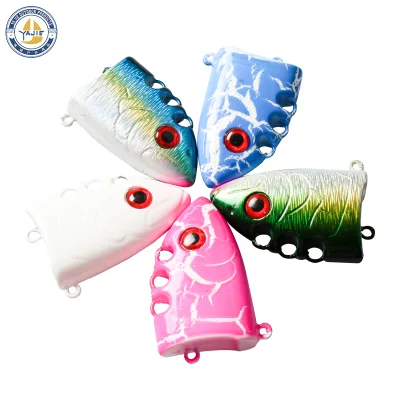


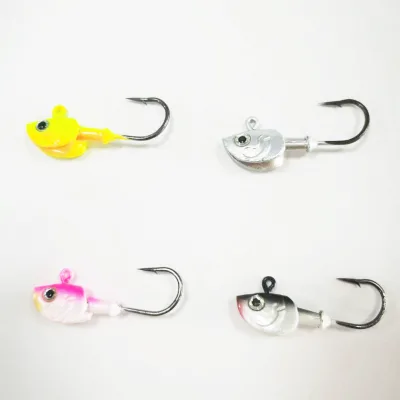


Comprehensive Sourcing Guide
Strategic Sourcing Guide for Lake Jig Head Fishing Lures
The global market for freshwater fishing equipment continues to expand, with the lake jig head fishing lure emerging as a critical component for anglers targeting species such as crucian carp. For B2B procurement professionals, sourcing these items requires a nuanced understanding of material composition, structural specifications, and supply chain logistics. This guide synthesizes observed market data and technical attributes to provide a disciplined framework for evaluating potential suppliers and managing procurement risks. The focus remains strictly on verified product attributes and industry-standard practices, ensuring that sourcing decisions are grounded in factual evidence rather than speculative claims.
Material Composition and Structural Integrity
The foundation of a high-performance jig head lies in its material composition. Analysis of the current product landscape reveals that Lead is the predominant material utilized for the weight component of these lures. This choice is driven by lead's high density, which allows for compact designs that facilitate deep casting and rapid descent in lake environments. However, the procurement strategy must also account for the metal hook component, which is typically integrated into the lead head. The observed product data indicates that hooks are available in specific sizing ranges, such as 1/0 and 2/0, with some listings specifying a broader range from 1# to 5/0.
When evaluating suppliers, buyers must verify the metallurgical properties of the lead used. While the supplied facts confirm the material is lead, they do not explicitly state the purity level or the presence of alloying elements designed to reduce toxicity or improve casting distance. Procurement teams should request material safety data sheets (MSDS) to ensure compliance with environmental regulations, particularly regarding lead content in finished goods destined for export. Furthermore, the Metal attribute is a general classification observed across the product range, necessitating a specific inquiry into whether the hook is made of steel, carbon steel, or a specialized alloy that offers superior corrosion resistance in freshwater environments.
Technical Specifications and Model Variations
The technical diversity of lake jig heads is significant, with manufacturers offering a wide array of models to suit different fishing conditions. The observed product models include specific identifiers such as jg04-07, jh02-03, HY-0111, HY-0104, HY-013, HY-9632, and HY-2310-Rigs. These alphanumeric codes often correspond to specific weight configurations or head shapes. For instance, the jig head jh04-07 and jig head jh02 standards suggest a standardized naming convention that buyers can use to track inventory and consistency across orders.
Weight is a critical specification for lake fishing, where precise depth control is essential. The data indicates a standard weight range of 3.5g, 5g, 7g, 10g, and 14g, alongside imperial measurements like 1/16, 1/4, 3/8, 1/2, and 3/16 OZ. Some listings also reference heavier configurations up to 100g or 35g/40g/50g, though these may be more suited for offshore or heavy-duty applications rather than typical lake scenarios. Buyers must align their order specifications with the target fishing depth. The observed attribute of Diving Depth(m): 0.5-Fish:Crucian provides a specific performance benchmark, suggesting that certain models are optimized for shallow to mid-water column fishing targeting crucian carp.
Packaging Standards and Logistics Considerations
Packaging plays a dual role in protecting the product during transit and facilitating retail presentation. The observed product data highlights a variety of packaging methods, including in Carton, in Blister Box, in PP Bag, Box, PVC Bag, and Customise options. For bulk B2B transactions, the Carton and PP Bag options are likely the most cost-effective for shipping, while Blister Box and PVC Box (noted as Pakage: PVC Box) are more suitable for direct-to-consumer retail units.
A specific observation notes a packaging configuration of 100PCS/ PVC Bag, which indicates a standard bulk unit size. This is a crucial data point for inventory planning and warehouse management. Additionally, the Customise attribute suggests that suppliers are willing to adapt packaging to meet specific branding requirements, a valuable capability for private label buyers. However, the presence of in Blister Box and in Carton as distinct options implies that buyers must clearly specify their preferred packaging format in the purchase order to avoid fulfillment errors. The location of the origin, identified as China and specifically Weihai China, is a known hub for fishing tackle manufacturing, which influences logistics planning and lead time expectations.
Compliance, Certification, and Safety Verification
While the supplied facts do not list specific certification numbers or compliance standards, the nature of lead-based fishing lures necessitates rigorous verification of regulatory adherence. Lead is a restricted substance in many jurisdictions, and buyers must ensure that suppliers comply with international standards regarding heavy metal content. The absence of explicit certification data in the product listing means that procurement teams cannot assume compliance based on the product description alone.
Buyers should request third-party test reports verifying that the lead content meets the limits set by regulations such as the EU's REACH or the US Consumer Product Safety Commission (CPSC) guidelines. The prod_standard field lists entries like jig head jh04-07 and 100g, which appear to be internal model standards rather than external regulatory certifications. It is imperative to distinguish between a manufacturer's internal model standard and an external safety certification. Procurement contracts should explicitly require that all lead components are free from excessive impurities and that the final product passes toxicity tests. Without this verification, the risk of shipment rejection at customs or legal liability in the destination market remains high.
Supplier Evaluation and Production Capacity
Evaluating suppliers for lake jig head lures requires a focus on production capacity and customization capabilities. The observed MOQ (Minimum Order Quantity) ranges from 2 to 3000, with specific listings showing 100, 1000, and 50pcs as common thresholds. This wide range suggests a market that accommodates both small-scale traders and large-volume distributors. A supplier offering an MOQ of 2 may be suitable for sampling or prototyping, while a supplier with an MOQ of 1000 is better suited for established mass-market distribution.
The Customization attribute is a key differentiator. Suppliers that offer customization can adapt hook sizes, lead weights, and packaging to specific market needs. The Location data indicates that many products originate from Sea or Lake regions, but the specific prod_origin is Weihai China. Buyers should verify the supplier's actual facility location to ensure it aligns with the Weihai hub, which is known for its concentration of fishing tackle manufacturers. Additionally, the Product Features such as Luminous capabilities indicate that some suppliers offer enhanced visibility options for low-light fishing conditions. Buyers should assess whether these features are standard or require a premium, and verify the durability of the luminous coating through sample testing.
Quality Control and Performance Validation
Quality control for jig heads involves inspecting the integrity of the lead head, the sharpness of the hook, and the strength of the eyelet connection. The Material is listed as Metal and Lead, but the quality of the casting process is not detailed in the provided facts. Buyers must establish a quality control protocol that includes visual inspections for casting defects, such as air bubbles or uneven surfaces, which can affect the lure's action in the water.
The Hook Size specifications, ranging from 1/0 to 5/0, require precise verification. A mismatch in hook size can lead to product returns and damage to the supplier's reputation. The Color options, including Pink, Orange, Black, and Yellow, are standard, but the Colour: See Detail Picture attribute suggests that color variations may be extensive. Buyers should request physical color swatches to ensure the hues match the intended market preferences. Furthermore, the Type: Artificial Bait classification confirms the product's nature, but the specific action of the lure (e.g., vertical jigging vs. horizontal swimming) depends on the head shape, which is not explicitly detailed. Buyers should request video demonstrations or sample performance data to validate the lure's action in water.
Long-Term Procurement and Market Trends
Sourcing lake jig head lures is not a one-time transaction but a long-term relationship that requires strategic planning. The Category: Jigging Lure and Position: Ocean Beach Fishing, Ocean Boat Fishing, Ocean Rock Fshing attributes indicate that while the core keyword is "lake," the product versatility extends to marine environments. This suggests that suppliers may have the capacity to produce multi-environment lures, offering buyers the opportunity to diversify their product portfolio.
The Weight and Diving Depth attributes highlight the importance of matching product specifications to local fishing conditions. As market trends shift towards more specialized lures, buyers should anticipate a demand for precise weight increments and specialized hook designs. The Standard entries like jig lure and jig head jh02 suggest a move towards standardization, which can simplify the procurement process. However, buyers must remain vigilant for changes in environmental regulations regarding lead usage, which could drive a shift towards alternative materials in the future. Maintaining a flexible supply chain that can adapt to material changes and regulatory updates is essential for long-term success in the fishing tackle industry.
Comparative Analysis of Product Attributes
To facilitate decision-making, the following table summarizes the key product attributes observed in the market data, highlighting the variability that buyers must navigate.
| Attribute Category | Observed Values | Procurement Implication |
|---|---|---|
| Material | Lead, Metal, PVC | Verify lead purity; check PVC usage for non-weight components. |
| Weight Range | 3.5g to 100g; 1/16oz to 1/2oz | Match weight to target species and fishing depth. |
| Hook Size | 1/0, 2/0, 1#, 4/0, 5/0 | Confirm hook size accuracy; check for rust resistance. |
| Packaging | Carton, Blister Box, PP Bag, PVC Bag | Specify packaging type to avoid fulfillment errors. |
| MOQ | 2, 50pcs, 100, 1000, 3000 | Align order volume with supplier capacity and budget. |
| Origin | China, Weihai China | Factor in shipping costs and lead times from this region. |
| Features | Luminous, Customizable | Verify luminous durability; confirm customization lead times. |
This comparative analysis underscores the need for precise specification in purchase orders. The variability in packaging, weight, and hook size means that a generic request for "jig heads" is insufficient. Buyers must explicitly define the model number, weight, hook size, and packaging requirements to ensure the received goods meet the intended application. By adhering to these disciplined sourcing practices, procurement professionals can mitigate risks and secure a reliable supply of high-quality lake jig head fishing lures.
FAQs
What materials are used for lake jig head fishing lures?
Lead is the predominant material used for the weight component of these lures due to its high density. The hook is typically made of metal, often steel or carbon steel, to ensure sharpness and corrosion resistance in freshwater environments.
Which hook sizes are available for these jig heads?
Available hook sizes range from 1/0 and 2/0 up to broader ranges like 1# to 5/0. Buyers must verify the specific hook size accuracy to ensure it matches the target species and fishing conditions.
How are these fishing lures packaged for bulk orders?
Packaging options include cartons, PP bags, blister boxes, and PVC bags. A common bulk configuration is 100 pieces per PVC bag, while custom packaging is also available for private label requirements.
What is the minimum order quantity for these products?
The minimum order quantity ranges from 2 pieces for sampling up to 3000 pieces for large volume orders. Specific listings often show thresholds of 50, 100, or 1000 pieces depending on the supplier.
Can buyers customize the packaging for these lures?
Yes, customization is available for packaging to meet specific branding needs. Suppliers can adapt formats like cartons or blister boxes, though buyers must clearly specify their preferred packaging format in the purchase order.
What weight specifications are offered for lake jig heads?
Weights range from 3.5g to 100g, with common increments like 5g, 7g, and 14g. Imperial measurements such as 1/16oz, 1/4oz, and 3/8oz are also standard for various fishing depths.